Choosing the right domain for you municipality can seem like a no-brainer – until you start thinking about all the possible combinations of your name with a top-level domain! It can be a daunting task. Lately, we’ve had a few questions regarding how to choose between .com, .org, or .gov for the end of your domain.
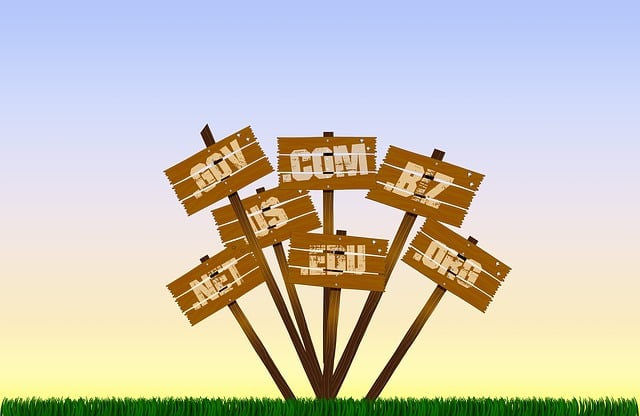
Do I need a .gov domain?
The answer is no. You do not need to have a .gov top-level domain (TLD) if you are a municipality or other government agency. However, having a .gov TLD for a website offers several benefits, primarily associated with the credibility, trustworthiness, and official status of the domain. Here are some key advantages:
- Credibility and Trust: The .gov TLD is reserved for official government entities at various levels (federal, state, or local). As a result, websites with this domain extension are often perceived as reliable, authoritative, and trustworthy sources of information. Users tend to trust information from official government websites more than other sources.
- Official Recognition: A .gov domain signifies that the website is an official government platform. This can help users easily identify and access information provided by government agencies, departments, or organizations.
- Security: .gov domains are subject to strict registration requirements and security measures to ensure that they are used exclusively by legitimate government entities. This helps prevent misuse or fraudulent activities associated with the domain.
- Search Engine Ranking: Search engines may give preferential treatment to .gov websites in search results, as they are often considered reliable and authoritative sources. This can contribute to better visibility and ranking in search engine results pages (SERPs).
- Enhanced Credibility for Information: Content hosted on .gov websites is generally seen as accurate, official, and unbiased. This can be particularly important for disseminating critical information, official announcements, and public services.
- Access to Government Resources: Some government-related programs, services, or information may be restricted to .gov domains. Having a .gov domain ensures that the website can access and utilize government-specific resources, databases, or services.
It’s important to note that obtaining a .gov domain is typically restricted to qualifying government entities, and the registration process is often more rigorous compared to other generic or country-code TLDs. The use of .gov is intended to maintain the integrity and authenticity of government-related online communication.
How to get a .gov TLD
The Cybersecurity and Infrastructure Security Agency (CISA) of the United States administers the .gov TLD and makes it available solely to U.S.-based government organizations and publicly controlled entities. According to their information sheet, it is available at no cost to qualifying entities. The only “cost” involved is that of the time involved to register for the .gov TLD. The CISA verifies each entity that applies for this designation, and you will be required to provide documentation and verification to be approved.
Because the .gov TLD is only given to approved and verified government entities, CourseVector cannot manage the domain for you. You will be responsible to point the domain yourself.
.com and .org TLDs
A municipality can use a .com or .org top-level domain (TLD) for its website, although it may not align with typical practices for government entities. Here are some reasons why a municipality might choose to use a .com or .org TLD:
- Availability and Flexibility: In some cases, the desired .gov domain may already be in use or unavailable. Municipalities might opt for a .com or .org domain because these extensions offer more flexibility and availability.
- Specific Purposes: Municipalities might use .com or .org TLDs for specific purposes, such as promoting economic development, tourism, or community events. These domains may be used for websites that function more as promotional or informational platforms rather than official government portals.
- Non-Governmental Entities: If a municipality has certain non-governmental entities, such as public-private partnerships or community organizations, it might use a .com or .org TLD for these entities to distinguish them from official government websites.
- Branding or Marketing Strategies: Some municipalities might choose a .com or .org domain for branding or marketing reasons, especially if they want to create a distinct online identity that goes beyond the traditional perception associated with .gov domains.
- Historical or Legacy Reasons: In some cases, municipalities may have initially chosen a .com or .org domain for historical reasons or because they started their online presence before .gov domains were widely adopted for government entities.
- Ease of Use: Sometimes it’s just easier and quicker to obtain and move forward with a .com or .org TLD. CourseVector can purchase and manage these domains on behalf of a municipality as well, taking some of the stress of managing, pointing, and renewing a domain off already busy staff.
.com versus .org – How to Choose
A .com TLD is widely associated with commercial and business entities. If the website is intended for commercial purposes, such as e-commerce, promoting products, or conducting business activities, a “.com” TLD is a natural choice. It is certainly the most recognized and widely used TLD on the internet. Many users automatically assume that a website’s domain will end in “.com.” Choosing a “.com” TLD can enhance brand recognition and make the website easier to remember for users. For a municipality, it may be wise to purchase the .com version of the domain just so no one else purchases it to use for malicious reasons. It’s easy to set up a redirect from a .com (or any other TLD) to a .gov URL.
A “.org” TLD is traditionally associated with non-profit organizations, charities, and other entities with a focus on social, educational, or charitable activities. Choosing a “.org” TLD signals a commitment to a mission beyond commercial interests, which may fit with a smaller, local government entity. It is often perceived as a TLD for organizations with a community-oriented or service-driven mission. It may convey trust and credibility, especially when dealing with issues related to social impact, education, or public service. Again, it may be wise to purchase the .org version of your URL so that no one else does.
There are even more TLDs available, but the more unorthodox choices may not be the best choice for a municipality trying to garner trust from its residents.
It is important to note that you can choose to purchase a .com or .org domain name while you’re in the process of being vetted for a .gov TLD. As stated above, it is easy to set up a redirect from your .com to your .gov URL. It may also be prudent to do this so that no bad actors decide to purchase the .com version of your .gov domain name to try to scam your residents.
Ownership Versus Stewardship
As we mentioned above, .gov TLDs are only issued to approved government entities. Therefore, the domains with .gov TLDs cannot be owned or managed by outside organizations leaving the municipality to managed the DNS themselves. Whereas, .com and .org domains can be purchased and managed on behalf of a municipality.
- Registration Information: The owner of a domain is typically identified in the domain registration details, including contact information and administrative details. The person or entity listed as the registrant is considered the owner.
- Ownership: Ownership implies legal control and rights over a domain name. When you own a domain, you have the legal authority to make decisions about its use, transfer, renewal, and overall management.
- Stewardship: Stewardship is handing over legal control to an ethical third party to make changes on your behalf. With the understanding the right can be revoked at any time. This should only be done with a trusted third-party.
At the end of the day, the municipality has the power of choice. There is no right or wrong way to go. Make the decision that aligns with the manpower, know-how, and reach of your municipality.